Interpret data in tables
key notes
What is a Table?
- A table is a way to organize information in rows and columns.
- It helps us see and understand data easily.
- Tables use numbers, words, or pictures.
🔢 Parts of a Table
- Rows → go across (side to side)
- Columns → go up and down
- Headings → tell what each row or column is about
👀 How to Read a Table
- First, look at the headings
- Then, find the row or column you need
- Read the number or picture carefully
❓ Answering Questions from Tables
- How many apples are there? 🍎
- Which item has more or less?
- Which item has the most or least?
- Compare two things (e.g., apples vs bananas)
🧠 Important Skills
- Counting numbers in the table
- Comparing (more, less, equal)
- Observing carefully
- Understanding simple questions
🎯 Tips for Students
- Always read headings first
- Point with your finger while reading
- Take your time and check your answer
- Practice with real-life examples (fruits, toys, animals)
🎉 Simple Example
👉 Bananas are more than apples.
👉 Apples are less than bananas.
Learn with an example
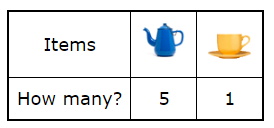
Jen looked in the kitchen cupboards and found some teapots and cups. She made a table of the items she found:
🖋️Which item did she find fewer of?
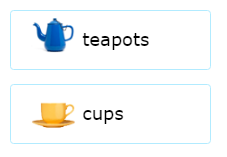
- Find the number of each item in the table. She found 5 teapots and 1 cup. She found fewer cups.
Pam asked her classmates to vote for their favourite zoo animal. She made a table showing how many people voted for each animal:
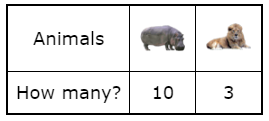
🖋️Which animal got more votes?
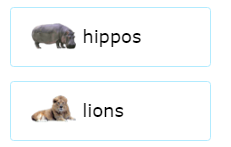
- Find the number of hippos in the table. 10 people voted for hippos.
- Find the number of lions in the table. 3 people voted for lions.
- More people voted for hippos.
Sue went to the local hardware store and bought some rakes and nails. She made a table of the items she bought:
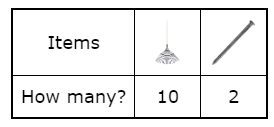
🖋️How many rakes  did she buy?
_______rakes
- Find the number of rakes in the table. She bought 10 rakes.
Let’s practice!