Which picture graph is correct?
key notes
Understand a Picture Graph (Pictograph)
- A picture graph uses images or symbols to show numbers.
- Each picture stands for a fixed number (like 1 apple = 1 or 2 apples).
👉 Check the Key (🔑)
- The key tells what each picture means.
- Example: 🍎 = 2 apples
- Always read the key first!
👉 Count Carefully 🔢
- Count the number of pictures in each row.
- Multiply using the key if needed.
👉 Same Size & Type of Pictures 🖼️
- All pictures must be same size and shape.
- Mixing different pictures can make the graph incorrect.
👉 Correct Labels 🏷️
- Each row should have a clear name (like fruits, animals, etc.).
- Without labels, the graph is confusing.
👉 Equal Spacing 📏
- Pictures should be neatly arranged in a line.
- No overlapping or messy placement.
👉 No Missing or Extra Pictures ❌
- The number of pictures must match the data exactly.
- Extra or missing pictures make the graph wrong.
✅ How to Choose the Correct Picture Graph
✔️ Has a clear key
✔️ Uses same pictures
✔️ Shows correct number of symbols
✔️ Is neat and easy to read
🎯 Simple Tip for Kids
👉 “Look, Check, Count, and Decide!”
Learn with an example
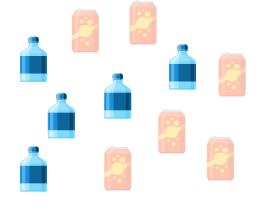
🏫Chris had a cookout. He got some drinks.
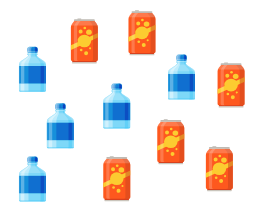
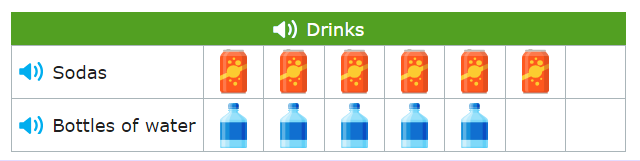
🏫Which pictograph shows the right number of each drink?
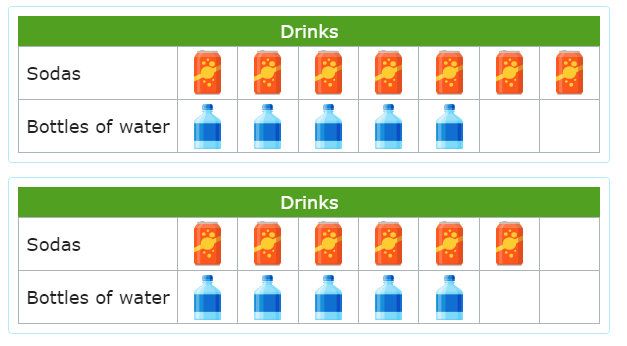
Count each type of drink.
There are 6 sodas.
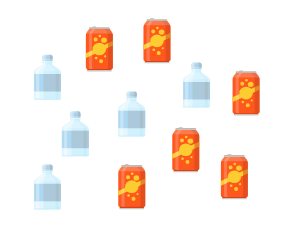
________________________________________________________
There are 5 bottles of water.
________________________________________________________
This pictograph shows 6 sodas and 5 bottles of water.
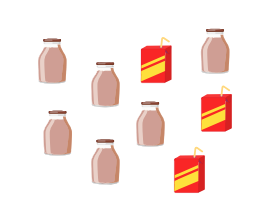
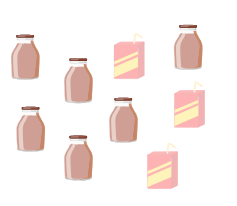
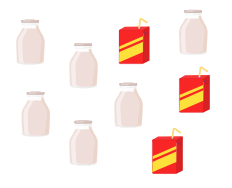
🏫Dorothy got some drinks to share with her art club.
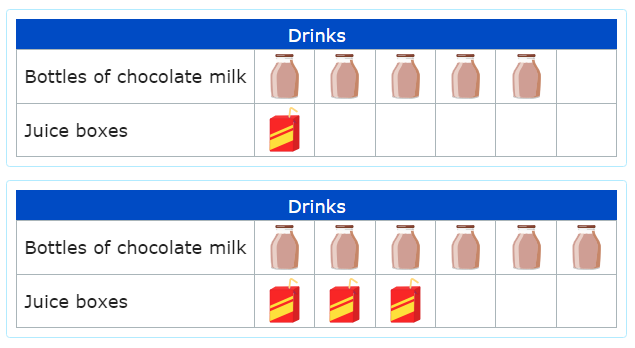
🏫Which pictograph shows the right number of each drink?
Count each type of drink.
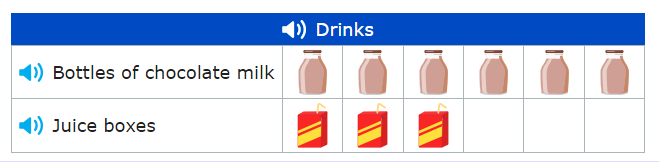
There are 6 bottles of chocolate milk.
________________________________________________________
There are 3 juice boxes.
________________________________________________________
This pictograph shows 6 bottles of chocolate milk and 3 juice boxes.
🏫Faith packed some snacks for the beach.
🏫Which pictograph shows the right number of each snack?
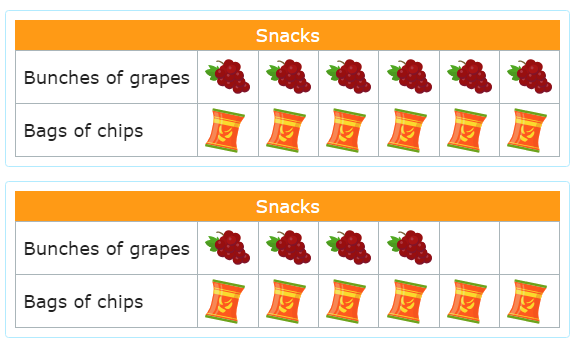
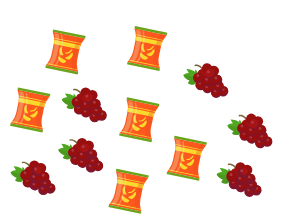
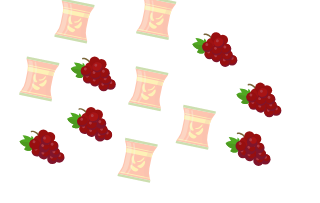
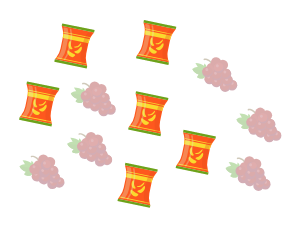
Count each type of snack.
There are 6 bunches of grapes.
________________________________________________________
There are 6 bags of chips.
________________________________________________________
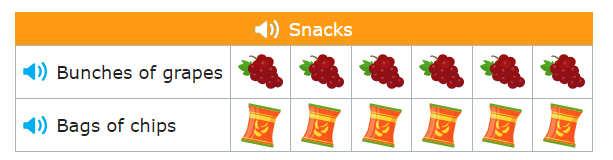
This pictograph shows 6 bunches of grapes and 6 bags of chips.
Let’s practice!